
The School That Escaped the Nazis
Reviewed By Nan van Dissel May 28, 2022
Author Deborah Cadbury.
Distributor: Hachette Australia
ISBN: 9781529365788
Publisher: Hachette Australia
Release Date: May 2022
Website: https://www.hachette.com.au
FaceBook:
YouTube:
Instagram:
X formally Twitter:
Anna Essinger had great foresight in 1933, but never did she imagine that anything as inconceivably barbaric and inhumane could come to pass as Hitler and the Nazi party’s reign of terror; horror beyond what imagination could grasp.
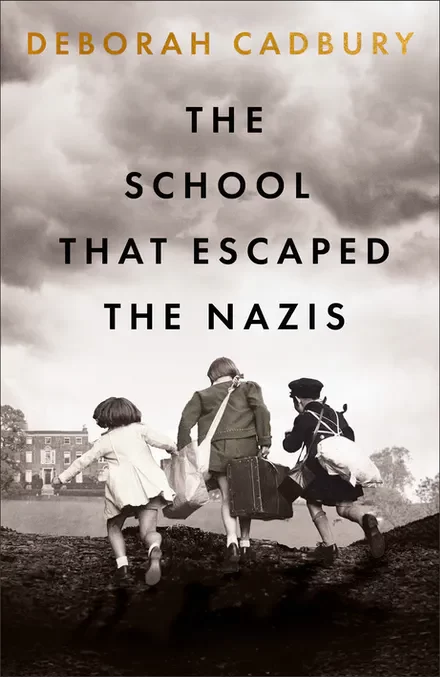
In her comprehensively researched book ‘The School That Escaped the Nazis’, Deborah Cadbury relates the truly remarkable story of the German Jewish educator Anna Essinger, who not only, over the course of 22 years, cared for and taught over 900 children, but also gave them safety and love.
After reading Hitler’s book ‘Mein Kamf’, Essinger realized that her progressive school in the south of Germany had no future. Hatching a dangerous and daring plan, Tante Anna, as she became known, quietly and methodically moved her school of 66 children to the safe haven Bunce Court in Kent, south England. Despite issues of illness, a shoestring budget, school inspectors and being enemy aliens in a foreign country, the school and its students thrived.
By 1938 Kindertransport’s, the organised rescue efforts of children from Nazi-controlled territory, that took place during the nine months prior to the outbreak of the Second World War, began arriving in England. Now nearly 60 years old, Tanta Anna with help set up a reception camp to provide safety and security for 10,000 refugee children; many of whom were deeply disturbed.
In June 1940, the school with roughly 140 students, again had to evacuate when southern England became a defense area. Given little over a week, the ever resilient Tanta Anna relocated the school to the dilapidated ‘Trench Hall’. With outstanding organizational acumen, resourcefulness and support from several wealthy benefactors, she saved the lives of hundreds of Jewish children in Nazi occupied territories.
‘The School That Escaped the Nazis’ is not only the amazing narrative of a little known hero and her enlightened education system, but it is the story of her students, many of whom went onto have distinguished careers. After the war, her school had taken in numerous traumatised children survivors of the Nazi concentration camps, who no longer knew the meaning of a normal life. With her wisdom and compassion, she gave them a home and hope, and as one of her students asserts, his two years at Bunce Court ‘turned him back into a human being’.
Although some readers may find the graphic recounting of the atrocities perpetrated during Hitler’s reign of terror, towards not only the Jewish population of much of Europe, confronting, I highly recommend this book to anyone who wants to gain a better understanding of the behaviours of the masses when one group of human beings is criminalized.